


Introduction to Birds and Singing
Bird vocalization is a fascinating aspect of avian behavior, essential for various functions within their ecological framework. Singing serves multiple purposes, often closely linked to reproduction and territory establishment. During mating season, male birds frequently use melodious songs to attract potential mates, asserting their fitness and genetic quality. Additionally, these vocalizations help to establish and defend territory, signaling to other males that a particular area is occupied. The intricate nature of bird songs influences not only social dynamics but also the overall health of populations within their environments.
However, it is crucial to understand that not all bird species engage in singing as their primary form of communication. While many birds delight us with beautiful melodies, a significant number have evolved alternative methods of vocalization that might be less melodious or even silent. These alternative forms of communication can include calls, squawks, or even visual displays. For instance, certain species may rely on non-vocal cues or body language to convey messages, demonstrating the diverse strategies birds employ to interact with one another.
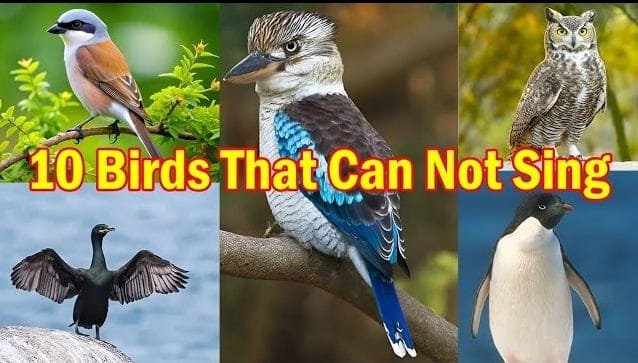
This blog post will explore ten remarkable bird species known for their inability to sing, providing insight into their unique adaptations and communication methods. We will delve into the reasons why singing might not be essential for these birds and how their ecological roles are fulfilled through other means. From the quiet beauty of certain flightless birds to the cryptic calls of nocturnal species, this exploration will reveal the rich tapestry of avian life beyond singing. Join us as we uncover the silent beauties of the avian world, showcasing the incredible diversity that exists among birds.
Top 10 Birds That Can’t Sing
Birds are often celebrated for their melodious songs, yet some species have developed adaptations that lead them to a more silent existence. Here, we explore ten remarkable birds known for their lack of singing ability, each showcasing unique characteristics and vibrant personalities despite their quietness.
1. American Woodcock (Scolopax minor): Known for its distinctive appearance, the American Woodcock features a short, stocky body with large eyes and a long bill. Found in woodlands and fields across North America, this bird is known more for its elaborate courtship display than for vocalizations. Its soft “peent” sound is rarely heard, making it an elusive creature.
2. Common Loon (Gavia immer): Recognized for its striking black-and-white plumage, Common Loons are found in serene northern lakes. These aquatic birds produce a variety of eerie calls that resemble yodels rather than traditional songs, with their sound being more of a haunting echo than melodic tunes.
3. Blue Jay (Cyanocitta cristata): The vibrant Blue Jay is prevalent in eastern and central North America. Famous for its intelligence and adaptability, it emits a series of harsh calls and mimicry, yet does not possess the melodic capabilities one might expect from a bird of its striking appearance.
4. Kiwi (Apteryx spp.): A flightless bird native to New Zealand, the Kiwi stands out with its long beak and small, round body covered in coarse brown feathers. Kiwis are nocturnal and produce a series of grunts and hisses, relying on their keen sense of smell to navigate their forested habitats.
5. Peregrine Falcon (Falco peregrinus): This iconic bird of prey is renowned for its incredible speed rather than its vocal skills. Peregrine Falcons inhabit diverse environments worldwide, and while they can produce a series of sharp “kak” calls, their sounds are not melodic.
6. Emperor Penguin (Aptenodytes forsteri): As the largest of all penguin species, the Emperor Penguin thrives in the harsh conditions of Antarctica. Their communication is based on a suite of trumpeting and braying sounds, yet they lack the song-like qualities that characterize many other birds.
7. Great Horned Owl (Bubo virginianus): Recognizable by its tufted “horns” and formidable size, the Great Horned Owl is native to the Americas. While it hoots and calls, its sounds are more utilitarian than melodious, serving as warnings or mating calls.
8. Red-tailed Hawk (Buteo jamaicensis): The quintessential bird of prey in North America, the Red-tailed Hawk is famed for its piercing cries, commonly heard in films. However, these calls are raspy and not melodic in the traditional sense.
9. Turkey Vulture (Cathartes aura): This scavenger is identifiable by its large wingspan and unique appearance. While Turkey Vultures are known for their soaring flight, they produce low hisses and grunts but lack any singing ability.
10. Snowy Owl (Bubo scandiacus): With its striking white feathers and deep yellow eyes, the Snowy Owl captures attention in its Arctic habitat. While it does emit a range of hoots and barks, its vocalizations do not approach the complexity of true songbirds.
Despite their lack of singing capabilities, these ten birds demonstrate that there are many ways to thrive and communicate in nature. Their silent adaptations have helped them survive in various environments, revealing the incredible diversity and uniqueness of avian life.
Why Some Birds Don’t Sing
Bird vocalization is a fascinating aspect of avian behavior, primarily used for communication, attracting mates, and marking territory. However, not all birds possess singing capabilities, and there are various biological and evolutionary reasons that account for this phenomenon. One of the key factors influencing a bird’s ability to sing is its physiological characteristics. Birds that sing typically have a specialized organ called the syrinx, which allows for a wide range of sounds. In contrast, many non-singing birds may have a less developed syrinx, limiting their vocal range and capabilities. This anatomical difference indicates that singing is not an evolutionary necessity for all birds.
Moreover, the role of a bird within its habitat significantly shapes its vocalization behavior. For instance, birds inhabiting dense forests may rely on visual signals and other forms of communication, which renders singing less vital. Likewise, species that are primarily ground-dwelling might not need to invest energy in vocal displays, focusing instead on their survival strategies. The concept of ecosystem niches also plays a crucial role; for example, non-singing birds often have alternative methods of communication, such as using body language or coloration, to interact with their environment and other species.
Additionally, silent birds might possess behaviors that compensate for their lack of vocalization. Many birds within this category evolve to be more secretive or elusive, enhancing their chances of survival by avoiding predation. This behavioral adaptation can be observed in various species that have developed camouflage or silent flight, allowing them to thrive in ecosystems where vocalizations could attract unwanted attention.
In summary, the absence of singing in certain bird species can be attributed to a combination of physiological traits, ecological roles, and survival strategies, illustrating the diverse adaptations present in the avian world.
The Importance of Non-Singing Birds in Ecosystems
Non-singing birds play a crucial role in maintaining the health and diversity of ecosystems, despite their lack of vocalization. These silent avian species contribute to the overall biodiversity, which is essential for the stability of various habitats. Their ecological roles often include serving as pollinators, seed dispersers, and prey for other animals, thus facilitating numerous interactions within food webs.
One significant way non-singing birds contribute to their ecosystems is through their unique communication methods. While they may not engage in melodious songs, many of these birds utilize visual signals, body language, or even non-vocal sounds such as wing claps to convey messages. For instance, species like the American Woodcock perform elaborate aerial displays and make various calls that communicate effectively with their peers. These behaviors help establish their territories and attract mates, essential for reproduction.
Non-singing birds also play important roles in their relationships with other species. Many of them participate in mutualistic interactions, where both species benefit from the relationship. An example includes some non-singing birds aiding in the seed dispersal of fruit-bearing plants. As these birds consume fruits, they inadvertently transport seeds, which can lead to the growth of new plants and enhance vegetation diversity. This interaction is vital in fostering resilient ecosystems capable of withstanding environmental changes.
Moreover, non-singing birds can serve as indicators of environmental health. Their presence or absence can signal changes in habitat conditions, particularly in specific ecosystems like wetlands and forests. Conserving these birds is, therefore, crucial not only for their survival but also for the overall balance within their habitats.
In summary, non-singing birds contribute significantly to the ecological framework through their alternative communication methods, inter-species relationships, and direct involvement in essential biological processes. Understanding their roles deepens our appreciation for the diversity of avian life and the intricacies of nature’s systems.