Navratri 2026 Day 2 (12 October): Maa Brahmacharini Puja Vidhi, Mantras, Bhog, and Katha
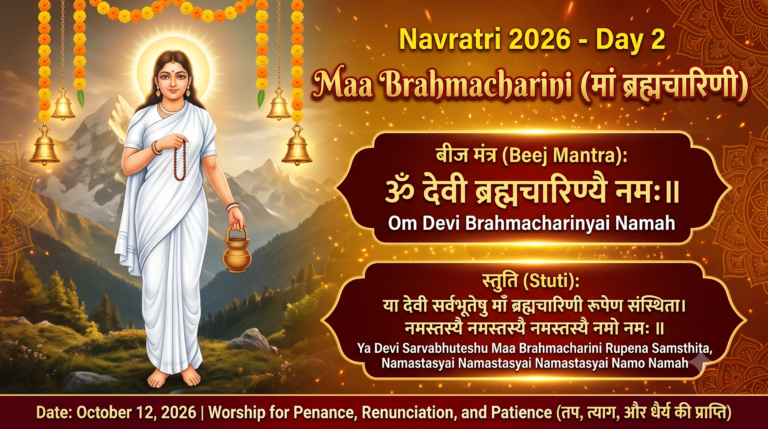
Jai Mata Di! As the auspicious and spiritually charged vibrations of Shardiya Navratri fill the atmosphere, devotees seamlessly transition from the grounded, foundational energy of Day 1 to the intensely disciplined and pure aura of Day 2. Falling on Monday, 12th October 2026 (Dwitiya Tithi), the second day of the grand Navratri festival is exclusively dedicated to the worship of Maa Brahmacharini, the second glorious avatar of the Navadurga.
Worshipping Maa Brahmacharini is synonymous with attaining eternal peace, divine wisdom, and the ultimate strength to observe penance (Tapasya). For those seeking success through unwavering hard work, focus, and sheer dedication in their modern lives, the blessings of this divine mother are absolutely paramount.
In this comprehensive guide, we delve deeply into the Katha (story), Swaroop (divine appearance), exact Puja Vidhi (rituals), favorite Bhog (offerings), and the sacred Sanskrit mantras of Maa Brahmacharini to help you attract her infinite grace.
The Mythological Katha: Who is Maa Brahmacharini?
The divine name “Brahmacharini” originates from two profound Sanskrit words: ‘Brahma’ (ब्रह्म), which translates to Tapasya (severe penance or absolute reality), and ‘Charini’ (चारिणी), meaning a devoted female follower or the one who conducts herself. Thus, Maa Brahmacharini literally translates to “The Goddess who performs severe penance.”
According to ancient Hindu scriptures and the Shiva Purana, after manifesting as Maa Shailputri (the daughter of the mountains), the Goddess took the form of Brahmacharini to win over Lord Shiva as her divine consort. Advised by the great celestial Sage Narada, she embarked on an incredibly arduous Tapasya that lasted for thousands of years amidst the harsh elements of nature.
During her intense penance, it is said she spent a thousand years consuming only fallen flowers and fruits. For the next hundred years, she lived on leafy vegetables (Shak). Over time, she survived solely on fallen Bilva leaves. Ultimately, in the peak of her devotion, she gave up food and water entirely. Because she completely stopped eating even leaves (Parna), she earned the famous and revered title ‘Aparna’ (अपर्णा).
Her unwavering resolve, fierce dedication, and physical endurance moved the heavens. The cosmic energies vibrated with her chants, and Lord Brahma eventually appeared before her, blessing her and ensuring her eternal union with Lord Mahadeva.
Her Divine Swaroop (Appearance)
Maa Brahmacharini’s appearance exudes absolute serenity, asceticism, and untainted purity. Unlike other fierce forms of the Goddess, she does not ride any vahana (animal mount) or carry weapons of destruction. Her form is a beacon of calm and spiritual awakening.
- Shwet Vastra (श्वेत वस्त्र): She is elegantly adorned in simple, pure white clothes, representing absolute peace, truth, and untouched purity.
- Japamala (जपमाला): In her right hand, she gracefully holds a rosary made of sacred Rudraksha beads, symbolizing her continuous, unbroken meditation and chanting of Lord Shiva’s name.
- Kamandalu (कमण्डलु): In her left hand, she carries a water pot (Kamandalu), the ultimate symbol of an ascetic and a self-sufficient, detached life.
- Barefoot: She walks barefoot, reflecting profound humility and a supreme willingness to endure worldly hardships for a higher purpose.
Spiritual and Astrological Significance
Awakening the Swadhisthana Chakra
In the profound yogic journey, the second day of Navratri directly targets the Swadhisthana Chakra (Sacral Chakra). Meditating upon Maa Brahmacharini helps devotees overcome earthly desires, bringing emotional balance, profound mental focus, and an uninterrupted flow of pure creative energy. It removes lethargy and instills a sense of purpose.
Astrological Control over Mars (Mangal Graha)
In the realm of Vedic astrology, Maa Brahmacharini governs the fiery planet Mars (Mangal). Devotees suffering from a weak Mars, dealing with anger issues, or facing Manglik Dosh in their Kundli (horoscope) should devotedly worship her on Day 2. Her blessings bestow courage, remove obstacles in marriage, and bless the devotee with property, emotional stability, and victory over inner demons.
Maa Brahmacharini Puja Vidhi (Rituals for October 12, 2026)
To attract the immense grace of the Goddess, perform her Puja with utmost devotion, physical cleanliness, and mental purity on 12th October 2026.
- Snan and Shuddhikaran (Purification): Wake up early during the Brahma Muhurat (the time just before dawn). Take a holy bath and wear fresh, clean clothes—preferably white, yellow, or green, as these colors are highly auspicious and vibrate with the energy of the day.
- Panchamrit Snan: Gently bathe the idol or picture of Maa Brahmacharini with Panchamrit (a holy mixture of raw milk, curd, pure ghee, honey, and sugar).
- Offerings (Arpan): Place the deity respectfully on the Chowki (altar). Offer Roli (vermilion), Chandan (sandalwood paste for coolness), and Akshat (unbroken rice for completeness).
- Floral Tribute (Pushpa): Offer fragrant white flowers. Lotus (Kamal) and red Hibiscus (Gudhal) are also highly favored by the Goddess and attract her immediate attention.
- Aarti and Vrat Katha: Light a pure Desi Ghee Ka Diya (lamp) and camphor (Kapur). Read the Brahmacharini Vrat Katha aloud to your family and sing the Durga Aarti with a deeply devoted heart.
Favorite Bhog (Goddess’s Offering)
Maa Brahmacharini leads a strictly ascetic lifestyle and deeply appreciates simple, pure, and unpretentious offerings.
- Shakkar (Sugar) and Mishri: Offering crystal sugar (Mishri) or simple white sugar (Shakkar) is considered highly auspicious on this day. It is firmly believed in the scriptures that offering sugar to Maa Brahmacharini brings long life (Ayu) to the family members and protects the entire household from severe illnesses and premature death. You can also offer simple milk-based sweets or Panchamrit as Prasad.
Sacred Sanskrit Mantras for Day 2
Reciting these sacred Sanskrit mantras creates a highly positive, protective aura around you, filling your mind with absolute Shanti (peace) and Dhairya (patience). Chant them 108 times using a Rudraksha mala for maximum spiritual benefit.
1. Beej Mantra (बीज मंत्र):
ॐ देवी ब्रह्मचारिण्यै नमः॥
Om Devi Brahmacharinyai Namah
2. Prarthana Mantra (प्रार्थना मंत्र):
दधाना कर पद्माभ्यामक्षमाला कमण्डलू।
देवी प्रसीदतु मयि ब्रह्मचारिण्यनुत्तमा॥
Dadhana Kara Padmabhyamakshamala Kamandalu।
Devi Prasidatu Mayi Brahmacharinyanuttama॥
Meaning: O Goddess Brahmacharini, who holds a rosary and a Kamandalu in her beautiful lotus hands, please be pleased with me and bestow your supreme, unmatched grace upon me.
3. Stuti (स्तुति):
या देवी सर्वभूतेषु माँ ब्रह्मचारिणी रूपेण संस्थिता।
नमस्तस्यै नमस्तस्यै नमस्तस्यै नमो नमः॥
Ya Devi Sarvabhuteshu Maa Brahmacharini Rupena Samsthita।
Namastasyai Namastasyai Namastasyai Namo Namah॥
Meaning: Salutations to the divine Mother who resides in all beings in the form of Maa Brahmacharini. I bow to her again and again, with utmost reverence.
Conclusion: Embrace the Power of Discipline in Modern Life
As you light the Diya and offer your prayers on October 12, 2026, remember that Maa Brahmacharini’s life is the ultimate masterclass in determination and resilience. In our fast-paced modern world, where distractions are endless, she teaches us that no goal is too big if you possess unwavering focus, strict discipline, and immense patience.
Whether you are a student striving for academic excellence, a professional building a business, or a homemaker nurturing a family, her Tapasya inspires us to stay dedicated to our respective paths without losing our inner calm.
May Maa Brahmacharini bless you and your loved ones with supreme wisdom, emotional fortitude, and endless spiritual growth this Shardiya Navratri.
Prem se bolo, Jai Mata Di! (प्रेम से बोलो, जय माता दी!)